If you have ever spent a summer morning in a high-rise flat along the Dwarka Expressway or a packed student PG in North Delhi, you already know the routine. You turn on the tap, and instead of clear water, you are greeted by an unpleasant, chemically pungent smell or a yellowish tint.
Your first instinct is usually to blame your local building management or uncleaned society tanks. But the reality goes much deeper than an unmaintained overhead reservoir.
Delhi-NCR’s water crisis is a complex, evolving battle against industrial runoff, aging municipal infrastructure, and massive groundwater depletion. While we often view water pollution as an abstract environmental issue, it directly impacts the municipal supply line entering our homes every single day.
To truly protect your household’s health, it helps to understand where these contaminants originate, how our daily urban habits inadvertently add to the burden, and what steps are being taken on a civic level to control the damage.
The Core Sources of Water Pollution in Delhi-NCR
The water traveling through the pipelines of Delhi and Gurgaon primarily comes from two main sources: surface water bodies like the Yamuna River and deep underground aquifers tapped via borewells. Unfortunately, both pathways face severe contamination challenges before reaching local water treatment plants.
The primary offender remains unchecked industrial discharge. Dozens of unauthorized manufacturing, textile, and electroplating units operating in bordering industrial clusters dump heavy metals—including toxic concentrations of lead, chromium, and cadmium—straight into open storm drains that feed into the river system.
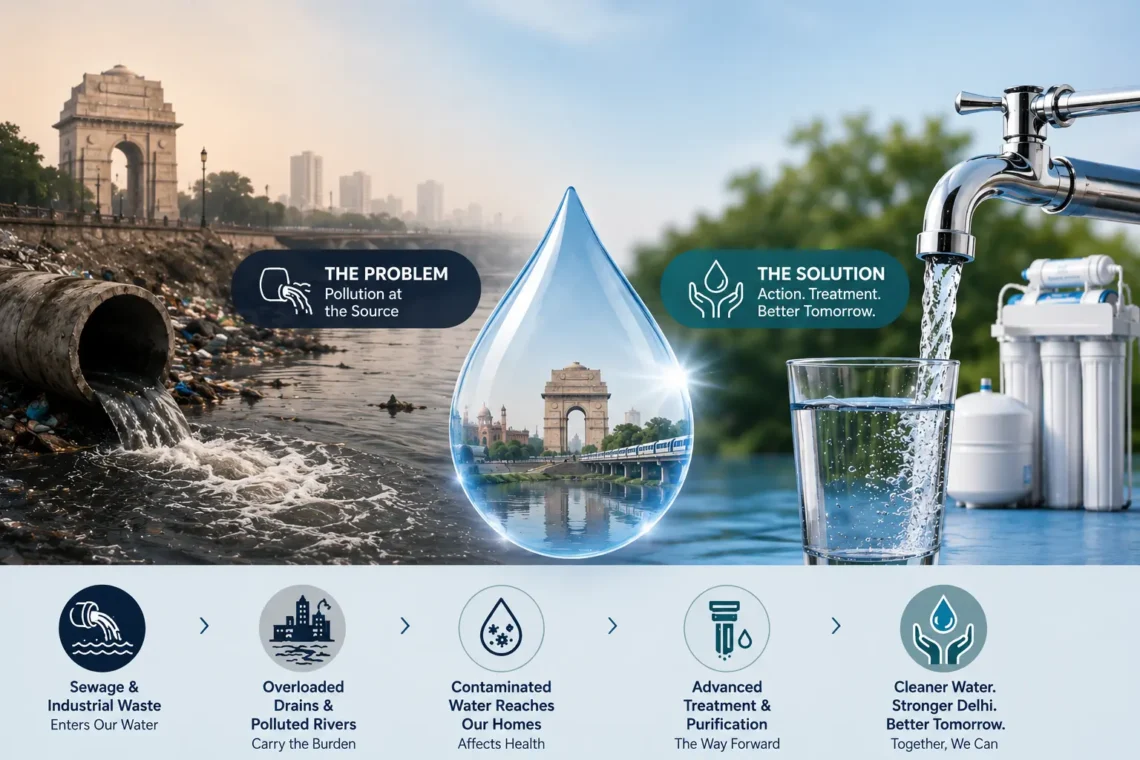
Additionally, municipal infrastructure struggles to keep up with rapid population growth. A substantial portion of the city’s domestic sewage flows entirely untreated into drainage canals due to overloaded Sewage Treatment Plants (STPs), creating massive ammonia spikes that routinely force drinking water production to a grinding halt.
How Our Daily Urban Lifestyles Contribute to the Crisis
It is easy to point fingers at large factories, but collective everyday choices in urban households play a massive role in straining local water quality. The modern consumer lifestyle relies heavily on chemical formulations that municipal systems were never originally designed to filter out.
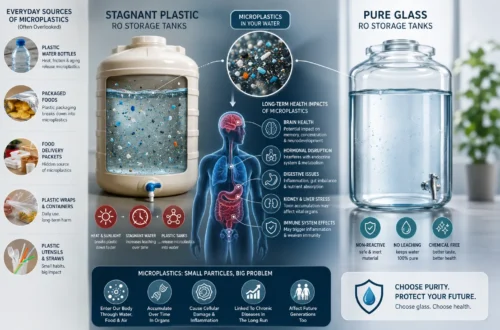
Every time we use harsh chemical detergents, synthetic floor cleaners, or commercial toilet acids, those non-biodegradable surfactants wash down the sink and enter the local ecosystem. Microplastics from synthetic clothing and improperly discarded pharmaceutical waste further degrade downstream water tables.
Furthermore, the sheer volume of water wasted across affluent residential sectors accelerates the issue. Excessive groundwater extraction via deep borewells lowers the water table dramatically, causing deep-seated heavy minerals and salts to leach into the remaining water—drastically raising the baseline TDS across West Delhi and Gurgaon.
| Pollution Category | Primary Source | Impact on Tap Water |
|---|---|---|
| Industrial Effluents | Electroplating, dyeing, and chemical units | Traces of toxic heavy metals High Risk |
| Domestic Sewage | Overloaded municipal drainage networks | Frequent ammonia spikes, volatile odors, and coliform bacteria |
| Groundwater Depletion | Unregulated borewell drilling in NCR complexes | Skyrocketing TDS levels, severe mineral hardness, and scaling |
Civic Initiatives: What Is Being Done to Curb Water Pollution?
Recognizing the scale of the crisis, local administrative authorities and environmental agencies have initiated multi-pronged strategies to upgrade the region’s water infrastructure.
Government bodies are currently investing in building advanced decentralized Sewage Treatment Plants (STPs) and modernizing existing water works. Stricter real-time monitoring systems have been installed across industrial zones to track chemical discharges, forcing non-compliant factories to face severe penalties.
Simultaneously, there is an active push toward rejuvenating local water bodies and dry lake beds across Dwarka and Gurgaon to naturally recharge groundwater aquifers. This artificial recharge helps dilute underground mineral concentration over time, though changing baseline aquifer quality remains a long-term project.
The Local Reality: While large-scale civic projects work in the background, municipal water treatment plants often struggle to remove microscopic industrial toxins and dissolved chemical salts entirely. Standard chlorination kills surface bacteria but leaves heavy metals and high TDS completely untouched, making point-of-use home filtration absolutely necessary.
Securing Pure Water in an Uncertain Environment
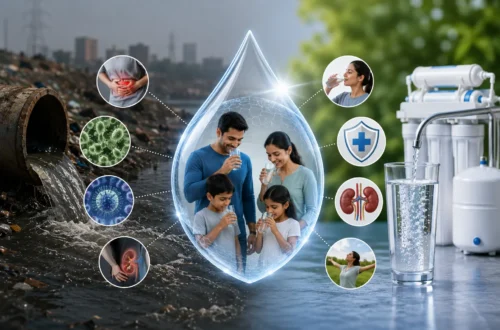
As civic agencies continue to clean up the macro-environment, protecting your family’s immediate health requires a dependable, micro-level solution right at your kitchen tap.
Relying on old-school gravity filters or single-stage purifiers simply won’t cut it when dealing with fluctuating heavy metal spikes and high groundwater hardness. A robust, multi-stage filtration setup is required to actively adapt to whatever the municipal lines or tankers throw your way on any given day.
With smart water purifier rentals from Puromaster, you can protect your household instantly using advanced multi-stage technology without worrying about hidden maintenance costs or expensive filter replacements. It is a practical, worry-free way to stay completely safe while the city fights its environmental battles.